Scarred Earth

POEM 04

Scorched, massive wooden bodies, tall, majestic like the Cedars of Lebanon. No match for fire though. Fed by the slightest breeze it comes red and filled with smoke

Bulging like a mushroom cloud, a blazing tongue lapping up the distance, tearing through valleys with crimson destruction, crossing canyons and scaling hills and

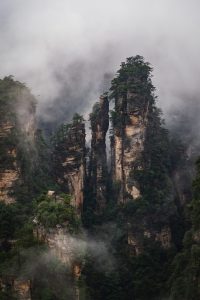
Mountains veiled in a gray and white fog that chokes the sight and breath of everything it approaches, sending wildlife,  any life scurrying for cover.

On some Sumatran highland or the like, it blazes through the planets oldest tropical forest. A lightening spark set dry brush smoldering; pleasant winds produced the

flame and set the blaze that scorched the beauty and scarred the face.
 

Prompt Four (still keeping with a theme…)

The Stage Set

Maybe we could eat blackberries together
now that my days will sprawl into tomorrows with
the ease of a cat, jumping from rooftop to rooftop

Maybe we could dance under a marmalade moon,
harvested with songs of the past, twirling
into twilight’s meandering hours

maybe we could lounge on the beach, the tide
washing over our toes until the other side of the noon
sun brings siestas and spirited dreams

Maybe this could be the next scene, the opening
act of the final play – the stage set –
if only just for one

The first line for this poem is taken from the last line of my first published novel, Benched (Cristy Watson, Orca Book Publishers, Victoria, 2011)

If you need anything just ask.

When should I ask?

Not now.

Not that.

Only if you need what I think you need.

But you know you can always ask.

Hour 4: “Tomorrow, the next chapter would begin”

I am alive, and I am breathing, my wounds are misleading

I am neither hurt nor injured, neither deterred, nor hindered

I am serving my purpose, just the way rain must pour, the river must flow, and fire burn and crackle

This shackle,

Is only mine, and I will not carry it forward

These chains are only mine, and this pain will not move onward

My daughter will grow and bloom, in a world that isn’t born yet

and if I must die to birth it, I will not forget,

why I was born

this fight will die with us and if I must die to let another be born free,

I am a sea,

of martyrs who win the war when they die,

so why not?

I am the dam, I am the bridge and I will chip away at myself to let the tomorrow’s river flow

You know, the future we fight for is so beautiful that being a mere step towards it,

Is often enough

So I am neither maimed, nor hurt

I am the desert,

That will revert,

And spring if she should grin,

Knows,

“Tomorrow the next chapter would begin”


From Jaishree Misra’s “Ancient Promises”

Hour 4 – (image prompt)

I wanted to journey,

across the hills and mountains,

to lands untold,

to futures gold,

but the hills said no.

I wanted to travel,

across the craggy peaks and dipping valleys,

back to the wind,

at fortune’s whim,

but the peaks said no.

I wanted to venture,

into caves so dark I’d need a longer lamp,

where history spelled,

and untouched filled,

the land beneath earth’s dome,

but the lamp said no.

So I got a new lamp,

it said no as well,

and I felt my way down blind.

Cultivation

—first line is the last line of Metazoa: Animal Life and the Birth of the Mind by Peter Godfrey-Smith

We enter a garden

on an official garden tour
with the intent to steal ideas

a sculpture garden: art at every turn
with the added bonus of photo ops

a garden for the blind
to refine our sense of smell

an herb garden
to connect with ancient wisdom

a hospital garden to escape
or entertain obsessive thoughts

a vegetable garden
to snitch or harvest

in the bamboo garden
where the wind rustles

learn to control your destructive impulses
in the raked sand and boulder Zen garden

become even more self-controlled
in the succulent garden

but be reminded that
we are not alone
in the community garden

and trust that our lives
fertilize the walled-off
secret gardens of our minds.

Humbled (Cont)

Humbled (Cont)


You don’t have to hear the words spoken to hear a voice.

Read what they’ve written with care and attention.

Look beyond our own voice and feelings.

In person, facial expressions and body language speak loudest.

Watch, show understanding and empathy.

The person may thank you, they may even feel humbled that you’ve heard them.

Especially family and friends.


Title and First Line from a Poem called Humbled by Poet Rosalind M Patton in her beautiful book. A Little Faith, Hope and Love: Poetry Collection

Poem No. 3 A Morning Walk

Early morning walk in Whitton Park


I walk slowly with my stick in Whitton Park

meditating on the morning dew I walk

I see the seasons change and rejoice

a carpet of bluebells in the month of May I see.

Their perfume wafts and bathes me anew.

Grateful I am to crunch the dry twigs

and see magpies steal to build their nests.

These oak woods are ancient

grandfather trees are two hundred years old

when autumn comes they turn to gold

and their leaves descend and kiss the forest floor

And lie until Spring to be fed back to them.

I see squirrels, blckbirds, thrushes and birds galore

What would the world be without birds and trees?

A prospect hard to contemplate.


Sundar

Hour Four 2021

All school subjects are dependent on language for learning and understanding.*

When I heard this haiku for the first time, I was mesmerized. 

long before language the S of the river

First of all, it was a monoku, which means rather than the normal three line haiku, 
it was a one-liner. The deep mystery resonated inside me instantly. One of those 
moments when you feel something profound, but it's a bit unfathomable. This poem 
was the first prize winner at the regional conference I was attending. One thing
 
that made this poem even more beautiful, was that the artist had created a picture 
with hand-painted and torn Japanese washi papers. I immediate contacted the author, 
and she sold it to me–the painting with the poem added—special order!. This poem 
went on to win the highest honor in the world of haiku. From over thirty countries
 
and thirteen hundred haiku, it was one of five poems chosen to win the annual 
Touchstone award for best haiku. Sometimes language is not needed to learn and to 
understand. Sometimes you just need to notice the natural world as it is to gain 
the pleasures of knowledge.

*p. 114, Reading in Secondary Content Areas, Fang and Schleppegrell

For Love

Pruned trees and painted houses
Plateaued careers and stale marriages.
Groomed children and polished cars
Swimming pools and 3 car garages.
Sheltered from rain, and the outside world,
Until tragedy sneaks in to the tiny circle.
When friends must comfort and console and aid.
Gifting food and time and labors.
For the first time, the did something for love.